

UGC works. I manage Million Monthly in Meta spend across DTC brands, and creator content is still one of the highest-performing ad formats in most of our accounts. That’s not changing anytime soon.
But there’s a version of the UGC model that im seeing produce much better results.
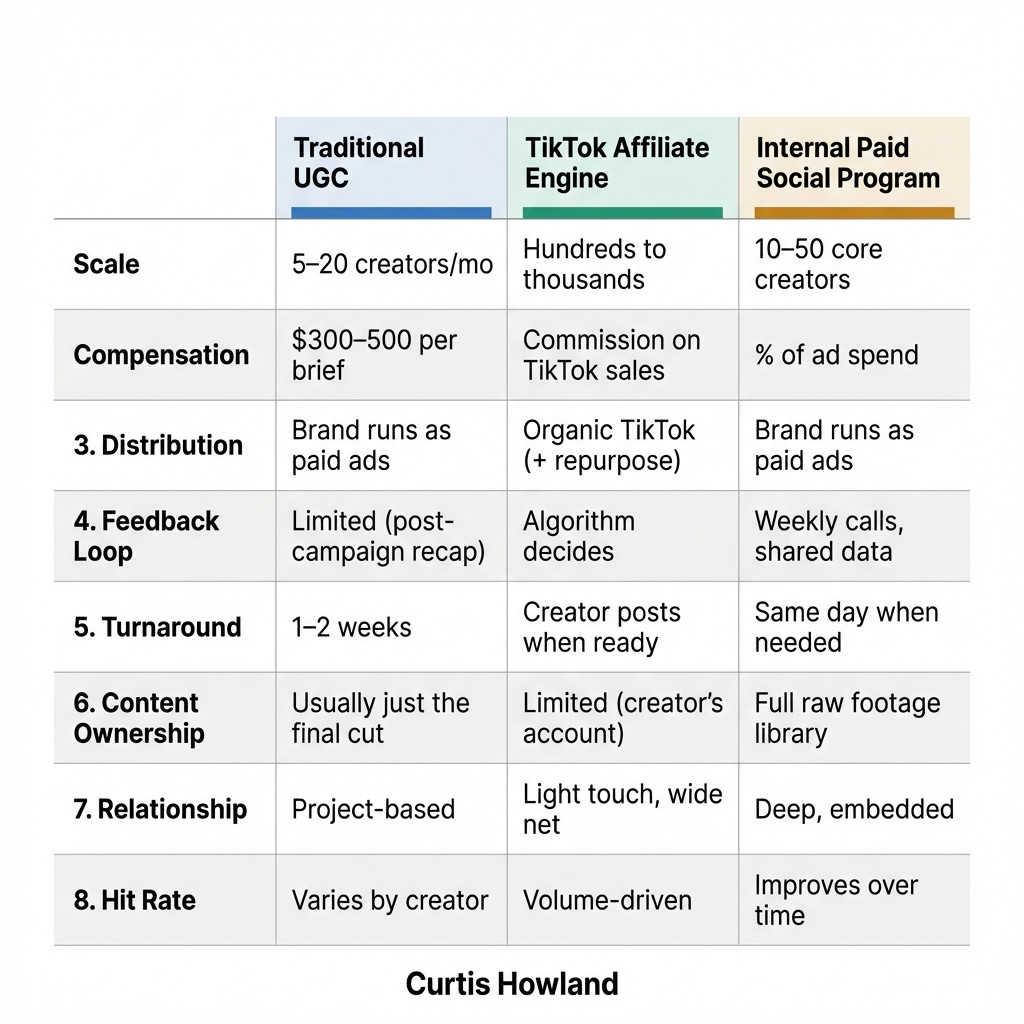
The standard approach looks like this: find a creator, pay them a flat fee per brief, get the video back, launch it, and hope it hits. When it doesn’t (and the hit rate on cold UGC is genuinely low), you move on to the next creator and start over. The content can be great. But the model itself doesn’t compound on its own. Every new brief is basically starting from zero with someone who doesn’t know your brand deeply.
If you work with us, you know I work with creators I trust, and I expect them to learn the brand, and I work with them again and again, coaching them. Its a huge boost and it works incredibly well to increase quality.
However, a few brands have figured out how to take this even further. They’re not just hiring creators. They’re building creator communities. And the results are impressive.
The interesting part? This model works on two completely different paths, and most brands can run both.
Two Paths, One Community: TikTok Affiliate vs. Paid Social
I want to draw a line between two types of “creator programs.” There are two models here, and understanding the difference changes how you build yours.
Path 1: TikTok Shop Affiliate Engine. This is the volume play. Creators post organic content on TikTok with affiliate links. They earn commissions on sales driven directly through their content.
The brand seeds product, the creator posts, and TikTok’s algorithm does the distribution. The brand doesn’t pay for media.
The creator earns when they sell. The scale here can be massive because there’s no ad budget bottleneck.
This works particularly well when the product is mass appeal and easy to understand, like a hoodie. Everyone can speak to Comfrt easily.
Side note - If you are spending over $200k/mo on paid and looking for a good TikTok Shop agency for scaling, hit reply and lmk (Its a high quality shop so they are picky about who they work with)
Path 2: Internal Creator Community for Paid Social. This is the performance play. A smaller, tighter group of creators produces content that the brand runs as paid ads on Meta, Snapchat, AppLovin, Pinterest, and elsewhere.
The brand controls distribution through ad spend. Creators earn based on how much their content gets spent behind it (% of ad spend) rather than direct commissions.
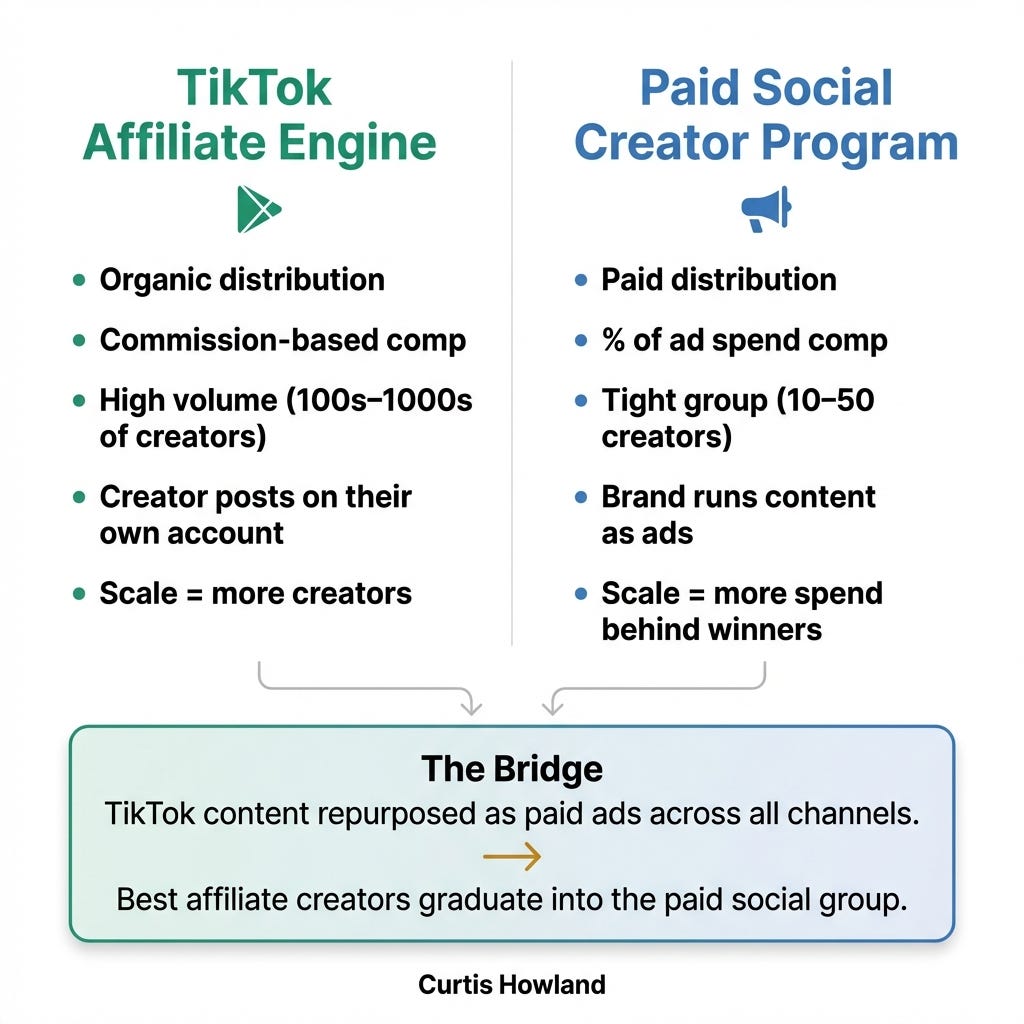
These strategies work together. The affiliate engine is where you find volume and discover who’s good. The internal paid social program is where your best creators go to get trained, get closer to the brand, and produce content that scales through ad spend.
Hudson Leogrande at Comfrt runs both. Hugo Pires at Sassy Saints built Path 2 directly. Let me show you how each works in practice.
The Comfrt Playbook: How Hudson Built Both Engines
If you haven’t heard of Hudson Leogrande, you should pay attention.
Hudson founded Comfrt in 2022 with $50,000 and three hoodie colors. The brand makes weighted hoodies designed to help with anxiety. It went from zero to TikTok Shop’s fastest-growing apparel brand worldwide, with over $700M in total revenue. No venture capital. Completely bootstrapped. (Limited Supply, S14 E3)
The Affiliate Layer: 600,000+ Creators
Hudson started on TikTok Shop by reaching out to micro-affiliates. Not celebrities. Not big influencers. Small, relatable creators who had never worked with a major brand before. He pitched them on the vision of where the business was going before the numbers existed to prove it.
He sold the dream and gave hungry creators a shot. And those early believers became the foundation.
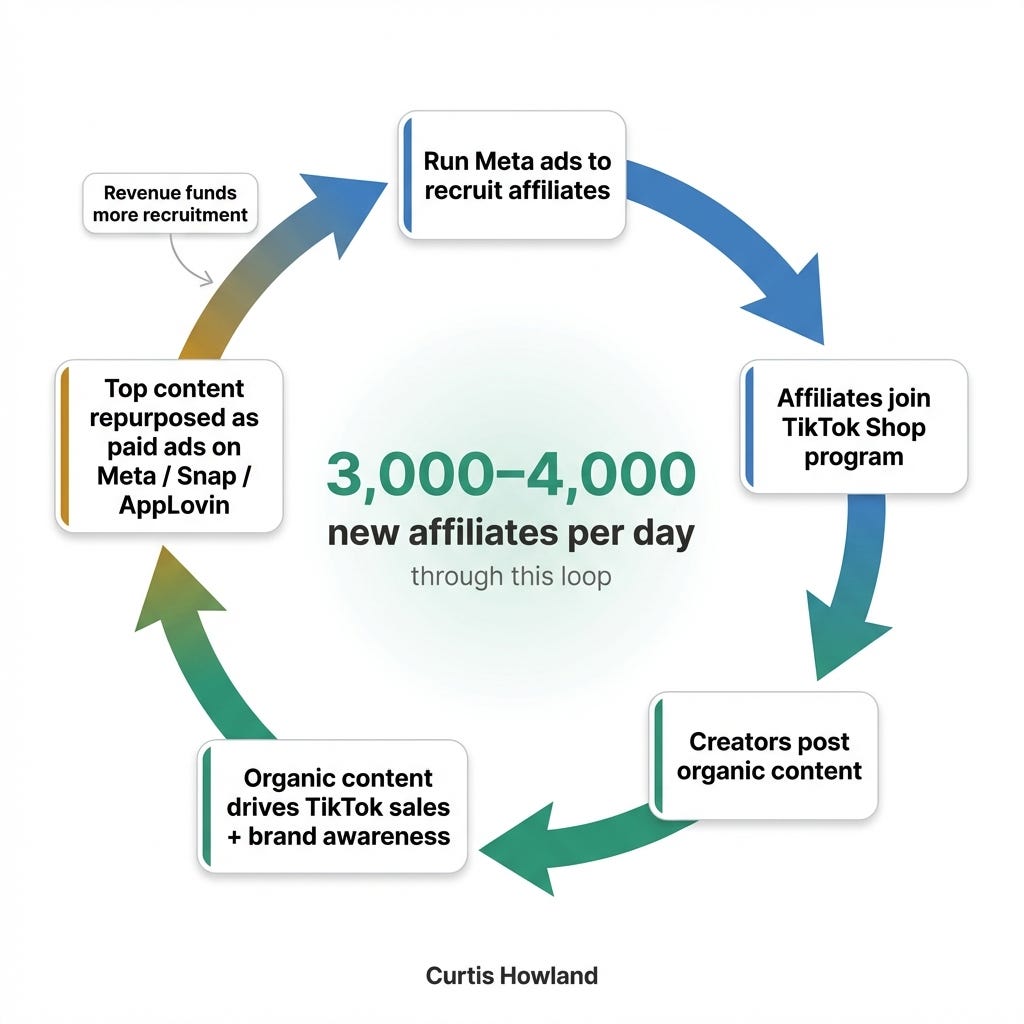
Now? Comfrt has over 600,000 TikTok Shop affiliates. The company has reportedly grown its creator library to over 1 million total. (AMZ Summits Speaker Bio) And here’s a tactic most brands would never think of: Hudson actually runs Meta ads to recruit new affiliates. He told Nik Sharma on Limited Supply that they can acquire 3,000-4,000 new affiliates per day, profitably, through paid acquisition into their community.
He’s spending money on Meta to recruit creators who will then generate organic revenue on TikTok.
Incredible growth loop for any wide appeal product like hoodies.
The Core Creator Layer: 500 People Deep
Inside that massive affiliate base sits a much tighter group. Hudson describes this as about 500 core people who function almost as an internal team. These are the creators who know the brand deeply, who are on calls regularly, who feed trends and ideas back to Hudson in real time.
The way Hudson described it: he has 500 people who know how his brain works, constantly flagging trends and cultural moments the brand should respond to. Super valuable distributed learning layer for Hudson.
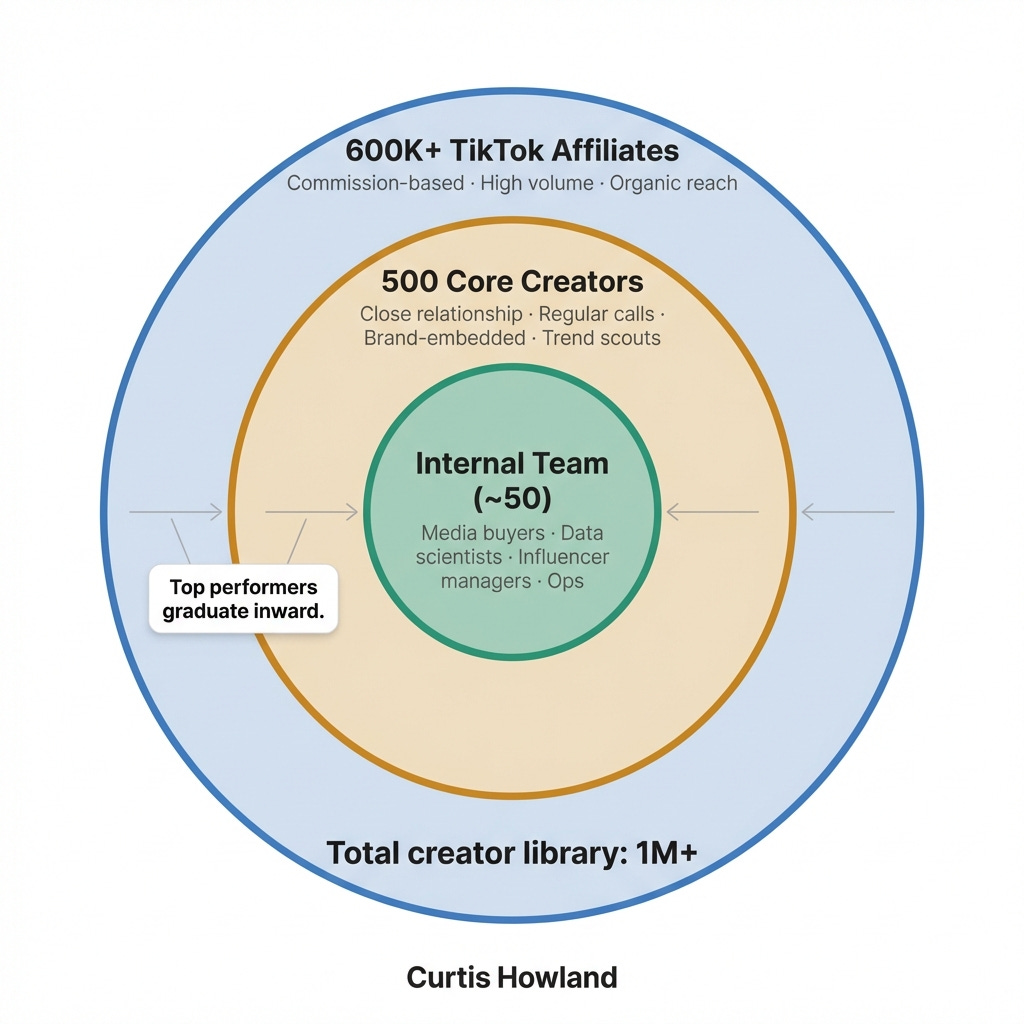
And here’s the critical piece that connects the two paths: all of that TikTok content gets repurposed across every paid channel. Hudson spends $500,000 per day on Meta. But when asked where customers say they found the brand, nobody says Instagram. Everyone says TikTok. The halo effect of TikTok organic content drives awareness, and then the paid social machine captures demand across Meta, Snapchat, AppLovin, and Pinterest. (Limited Supply, S14 E3)
TikTok is the origin point for all content. One creator, one video, five channels.
Specific Tactical Details That Matter
A few key things from the interviews:
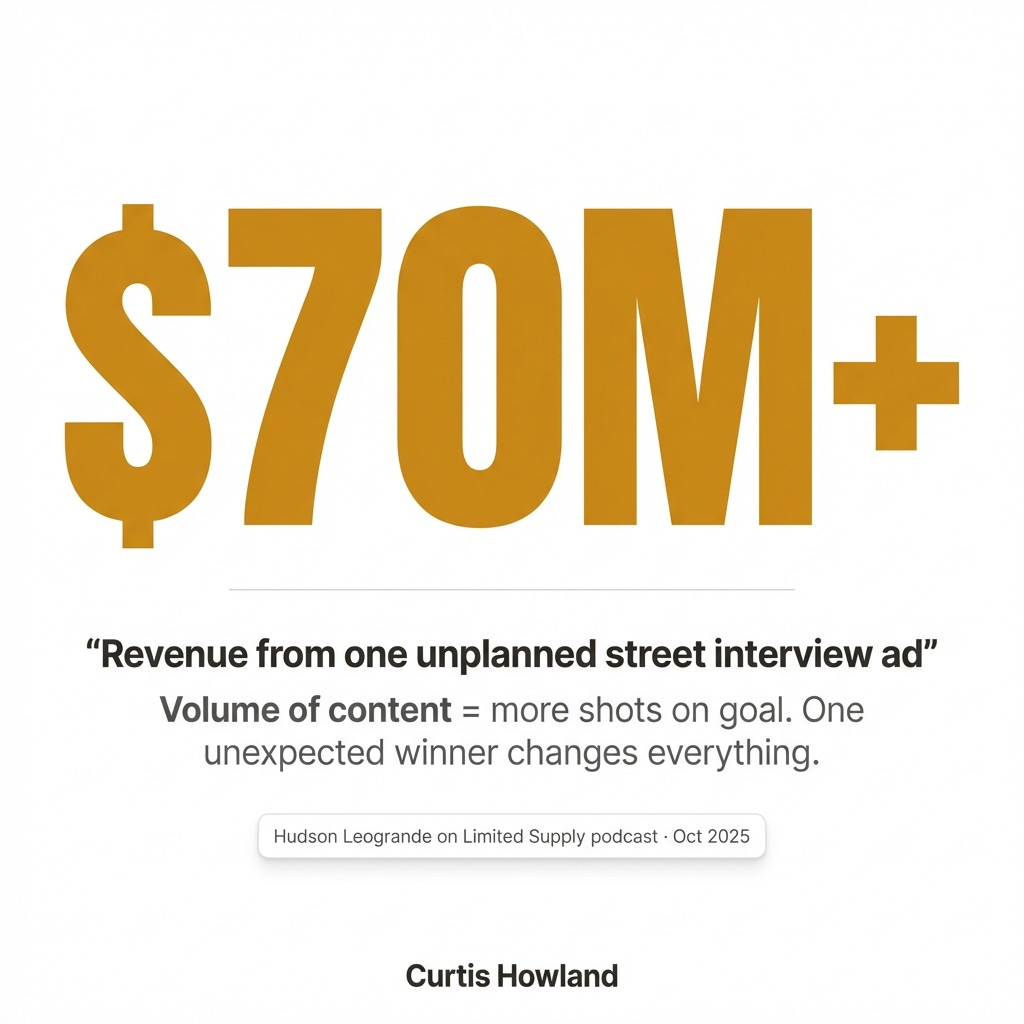
The $70M street interview. Hudson attributes over $70 million in revenue to a single street interview style ad. They didn’t plan for it. They tested a new format & it worked, and they scaled it everywhere. The lesson isn’t “go do street interviews.” The lesson is that the volume of content from 500+ creators means you’re taking way more shots on goal, and occasionally one of those shots is worth $70M.
No scripts. Ever. Hudson doesn’t give his creators scripts. He gives them guardrails and a general direction, then lets them be themselves.
His reasoning is that people can immediately tell when content is scripted, and it kills trust. He provides a framework (hook, emotional middle, FOMO/scarcity at the end, call to action) but never dictates exact words.
As he put it: he wants creators to stay within a range, but he’s never going to hand them a script because he doesn’t want them sounding like robots.
Quantity is the strategy, not a compromise. Hudson’s philosophy is that algorithms don’t know or care whether something was a $10,000 production or a creator talking into their phone. So he pushes quantity alongside quality, knowing the more shots on goal, the more winners emerge.
Creators inform product development. Hudson also asks his affiliates and core creators what products they want to see next. That feedback loop is how they expanded from hoodies into blankets, waffle tees, kids’ sizes, and sweatpants.
Running Meta ads to recruit affiliates is a growth loop. Hudson automated outreach by running paid Meta campaigns specifically to recruit TikTok affiliates. The affiliate then generates organic TikTok revenue, which pays back the acquisition cost and then some. Profitably adding 3,000-4,000 creators per day.
How Hugo Adapted This for Paid Social at Sassy Saints
This is exactly what came up on the latest episode of the Marketing Misfits podcast.
My guest Hugo Pires, the CMO at Sassy Saints (an eight-figure beauty brand based in Europe), saw the same Comfrt story play out in real time. He watched a Davie Fogarty interview where Hudson mentioned doing $48M in a single month and immediately sent it to his CEO.
It was a good filter: This guy is doing something fundamentally different, and the results back it up.
But Hugo’s situation was different from Hudson’s. Sassy Saints isn’t a TikTok Shop native brand doing hundreds of millions through affiliate. They’re a Meta-first DTC brand selling nail products. So Hugo took the core of what Hudson built and adapted it specifically for himself.
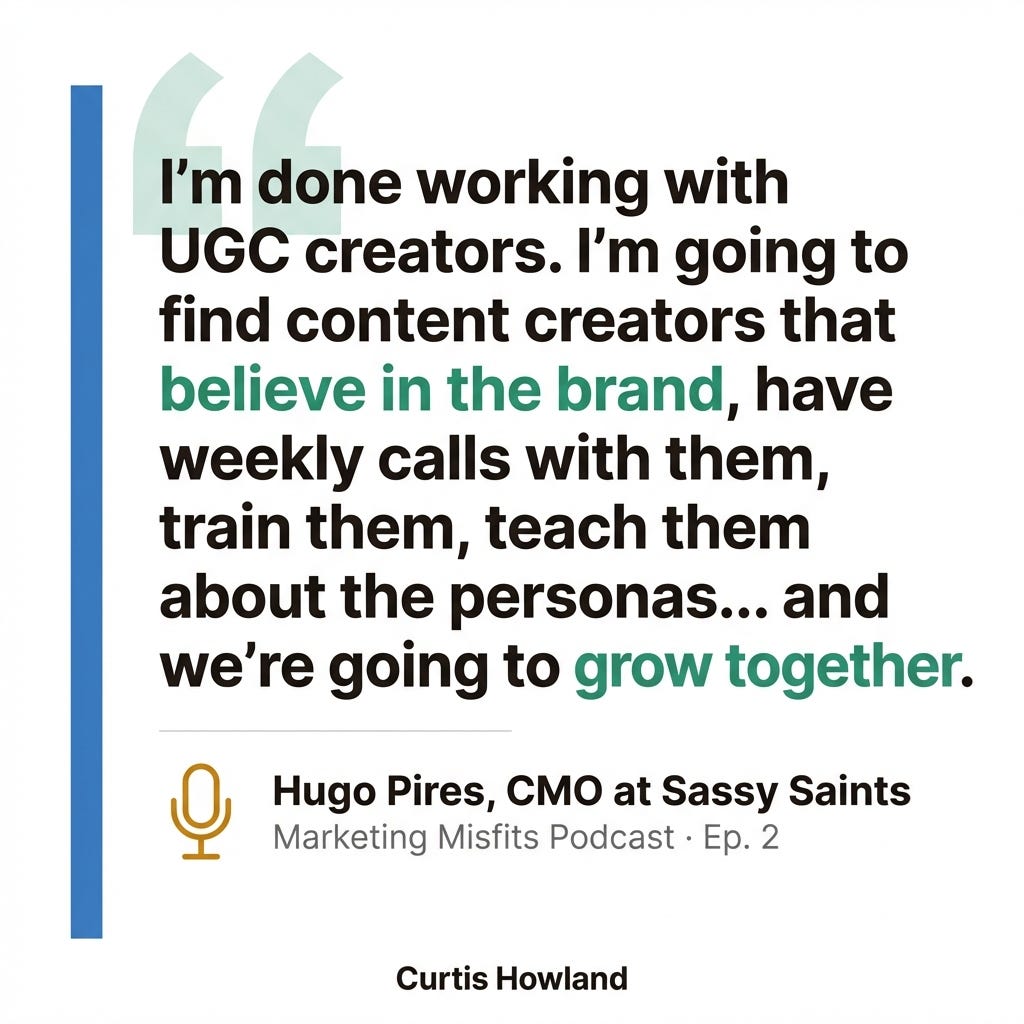
(Watch the full episode on youtube)
Here’s what Hugo built, and the specific mechanics of how it works:
Recruited from their ambassador program. This was smart. These people were already earning commissions and believed in the product. Trying to sell a performance-based comp model to traditional UGC creators is a hard pitch because they want their retainer and safety net. Ambassadors were already wired for performance-based income.
12 internal creators, not 500. Hugo doesn’t need Hudson’s scale because he’s not running a TikTok affiliate engine. He needs a tight group producing high-quality content for paid social. The intimacy of 12 people is actually the advantage at his scale.
Weekly calls. Hugo hops on, shares his actual ad account data, shows what’s working and what’s not, walks through winning angles, reviews specific creative performance, and gives direct feedback. The creators see real numbers. They understand which of their videos scaled and why.
Compensation is a percentage of ad spend. Not per-brief. Not a flat retainer. If their content earns spend in the ad account, they earn more. This is the key alignment. In a CBO structure (which Hugo runs), Meta allocates budget toward the best-performing ads. So creators whose content wins get naturally rewarded.
Concept framework drives the briefs. Hugo defines a concept as: persona + sub-persona + angle. For example: “Busy Bridget” (persona) + “time-pressed mom” (sub-persona) + “3 reasons moms love this 9-minute manicure” (angle). He either sends new concepts for testing or shares winning concepts for the creators to expand into new creative formats. Same concept can become a UGC video, a static ad, a demo video, or an AI voiceover piece.
WhatsApp as the operating system. Need to test a new concept? One message in the group chat. Hugo said he can get content back same day when he pushes for it. Compare that to the typical UGC workflow: UGC manager sends emails, negotiates contracts, ships product, and you’re looking at a two-week turnaround on a good day.
Content library compounds. Every video a creator submits includes raw footage that the brand owns. That B-roll becomes material for AI voiceovers, static ads, demo compilations, and formats the creator never even intended. The percentage of ad spend you’re paying isn’t just for the finished video. It’s for an ever-growing library of branded raw content.
Loyalty
This is my favorite part:
Hugo flew to Manchester to meet his creators in person. They went to dinner. They went to karaoke. These are real relationships.
The result? Competitors regularly reach out trying to poach Hugo’s creators. The creators screenshot those DMs and post them in the WhatsApp group, laughing about it.
They’re not leaving.
Hudson’s version of this is even more extreme. He described his 500 core creators as people who wake up wanting to win, who feel like they’re part of something, not showing up to a job. He explicitly said the growth at Comfrt wasn’t built from product seeding. It was built by creating a community and culture where people believe in the brand as much as the founder does.
You can copy someone’s ad. You can’t copy their creator relationships or those creators brand knowledge and dedication.
If you’re getting value from this, consider subscribing.
How to Start Building This
You don’t need 500 creators or $500K/day in ad spend. Here’s the practical path based on what I’ve seen work across these two models.
If You’re Starting the Paid Social Path (Hugo’s Model)
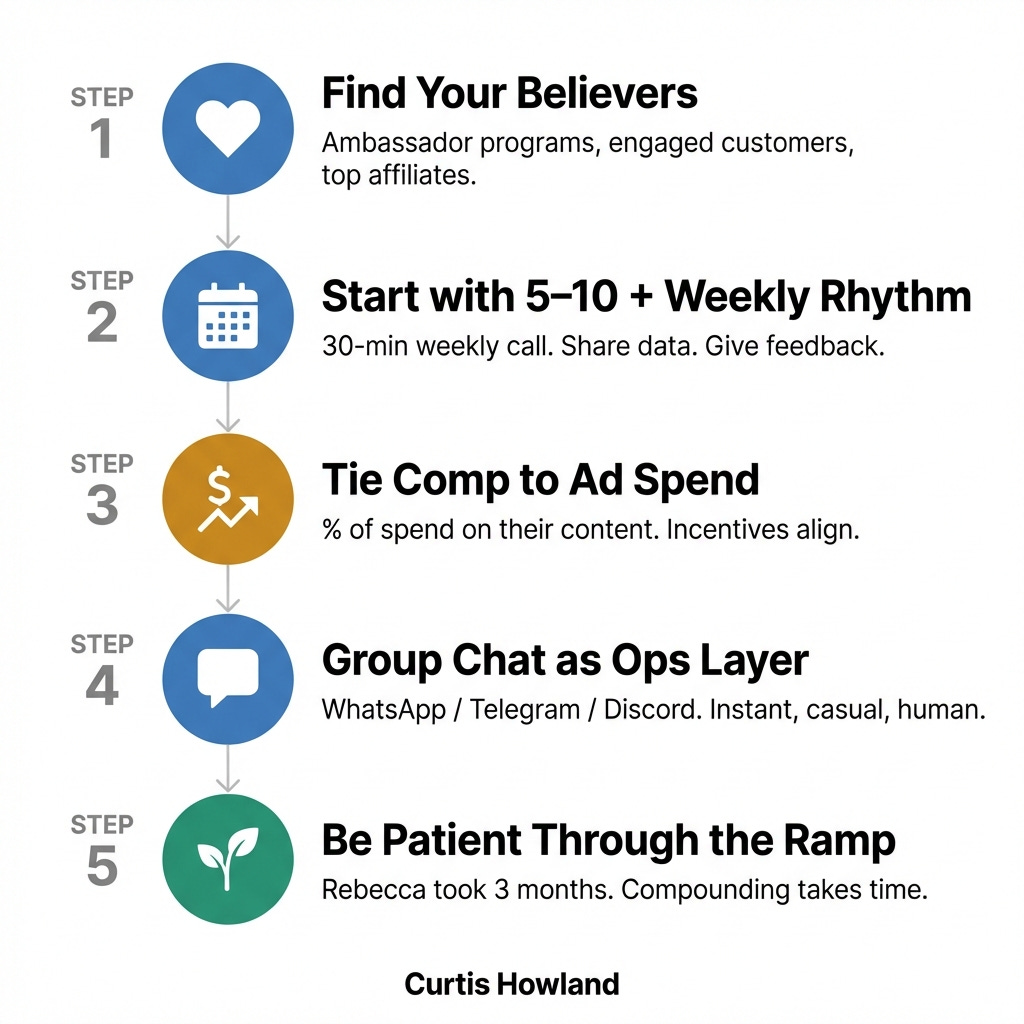
Step 1: Find your believers. Your ambassador program, your most engaged customers, your top-performing affiliates. These people don’t need to be sold on the brand. Hugo pulled his first creators from his existing ambassador program and it worked because they were already comfortable with performance-based comp.
Step 2: Start with 5-10. A 30-minute call where you share what’s working, give feedback, and distribute concepts. The consistency is what builds both the relationship and the skill.
Step 3: Tie compensation to performance. A percentage of ad spend on their content is the cleanest model. It aligns incentives perfectly. If Meta allocates budget to their creative, they earn. If it doesn’t, they’re motivated to improve. Know your margins before you commit.
Step 4: Use a group chat. WhatsApp, Telegram, Discord. The point is instant, casual, human communication. Not email threads and PDF briefs.
Step 5: Be patient. A top creator may take three months. Most brands would move on after one bad batch. The compounding only works if you give creators time to learn your brand, your personas, and what converts.
If You’re Building the TikTok Affiliate Path (Hudson’s Model)
Step 1: Target micro-affiliates,. Hudson specifically sought out small creators who had never worked with a major brand. They’re hungry, authentic, and willing to grow with you. He pitched the vision, not the current numbers.
Step 2: Recruit a. The fact that Hudson runs Meta ads to acquire TikTok affiliates is a playbook-level insight. If you can acquire a creator profitably who will then generate organic revenue, that’s a compounding growth loop.
Step 3: Use Discord (or similar) for community management. You can’t do weekly calls with 600K people. But you can build a community hub where top performers get recognized, winning content gets shared, and creators self-organize around trends.
Step 4: Graduate your best affiliates. This is the bridge between the two paths. Your top-performing TikTok affiliates become candidates for your internal paid social program. They’ve already proven they can create content that resonates. Now you train them deeper and repurpose their work across channels.
Step 5: Repurpose everything. TikTok content becomes Meta ads, Snapchat ads, AppLovin creatives, Pinterest pins. Hudson’s team treats TikTok as the content origin point for the entire paid media strategy. One video, five channels.
If You Can Run Both (The Full Stack)
The most powerful version is running both paths simultaneously. The TikTok affiliate engine generates massive content volume and organic reach. The internal paid social program produces trained, high-quality content for scaled ad spend. And the bridge between them creates a talent pipeline where your best organic creators become your best ad creators.
This is what Comfrt does at $700M. But the same architecture works at $2M. You just start with smaller numbers on each side.
The Bigger Lesson
The brands winning right now aren’t the ones with the biggest budgets or the fanciest production studios. They’re the ones building real communities around their content engine.
Hudson proved it at massive scale with Comfrt. Hugo proved it works at the eight-figure brand level. And the principles apply whether you’re doing $50K/month on TikTok Shop or $5M/month on Meta.
Traditional UGC still works and it’s still a core part of most brands’ creative strategies, including many of ours. The community model doesn’t need to replace UGC immediately. It makes the entire content engine stronger.
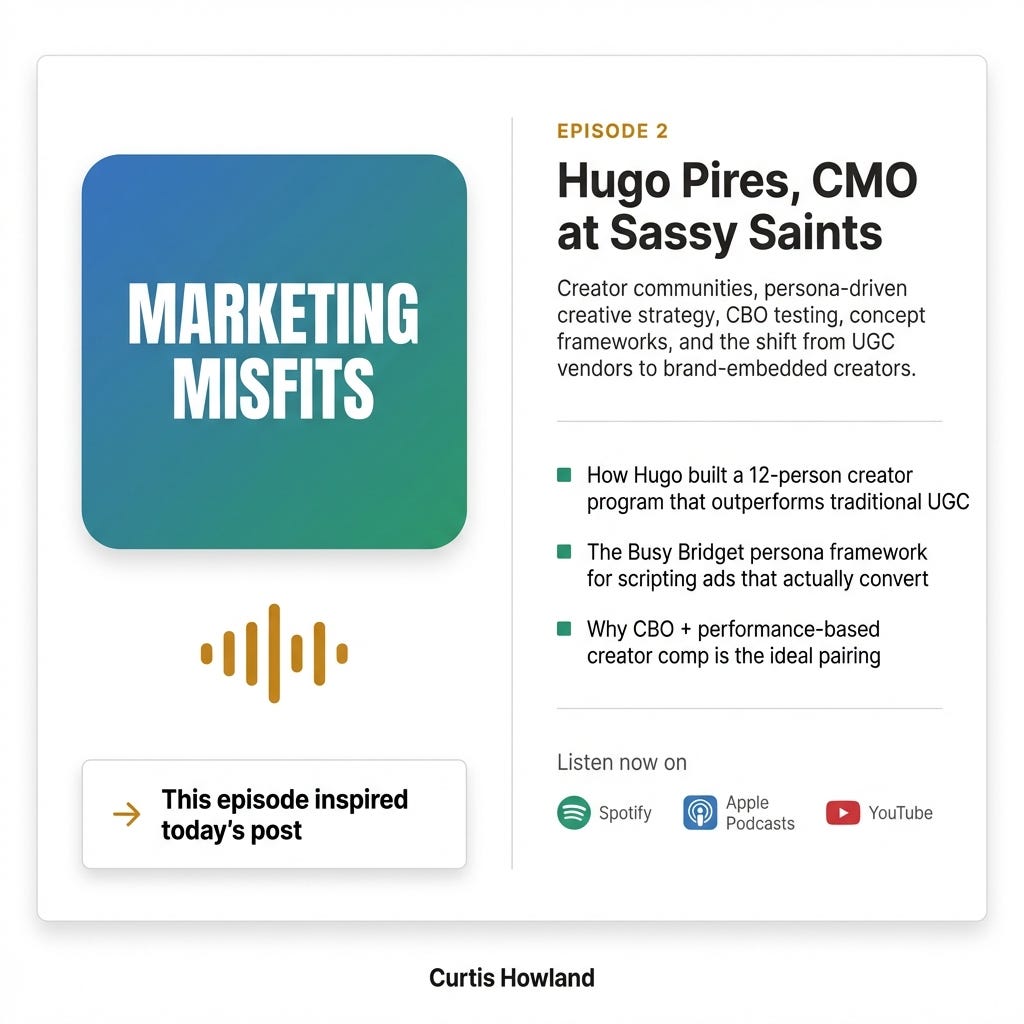
If you want to hear Hugo break this down in full, along with his persona-driven creative strategy, concept frameworks, and CBO testing approach, check out Episode 2 of the Marketing Misfits podcast. And if you want to go deeper on Hudson’s playbook, here are the sources I pulled from:
Limited Supply S14 E3: Inside Comfrt’s $700M TikTok Playbook (Nik Sharma & Troy with Hudson, Oct 2025)
The Foundr Podcast: From $0 to $100M/Year on TikTok & Snapchat (Nathan Chan with Hudson, Aug 2024)
Davie Fogarty x Hudson Leogrande: Comfrt’s $500M Story (Davie Fogarty interview)
The Heart Behind Comfrt, from the Founder (Hudson’s piece for ADAA)
If this was useful, share it with a founder or marketer who’s thinking about how to get more out of their creator relationships.