

1. “Half the money I spend on advertising is wasted; the trouble is, I don’t know which half.”
Attributed to John Wanamaker, the Philadelphia department store magnate. It’s one of the most quoted lines in advertising.
The same line gets pinned on Lord Leverhulme (the British soap baron who built Unilever), and sometimes on Henry Ford or JC Penney, depending on who’s telling it. Ogilvy quoted it in Confessions of an Advertising Man back in 1963 and attributed it to “Lord Leverhulme, and John Wanamaker after him.” Jeremy Bullmore checked the archives, found nothing, and decided it's all probably folklore. Its important enough that people want to think and believe it must have come from someone really smart.
Whoever said it was pointing at the oldest problem in the business: some of your budget is always getting wasted, and it’s not easily transparent.
If you’ve been reading my newsletter for a while, you know I love attribution, and if you haven’t, you should read this one. It’s still my favorite things that I’ve ever written.
8 Types of Attribution Every DTC Brand Should Know (And the 3 I Actually Use)

I manage millions in monthly Meta ad spend in the DTC space.
2. “The only advantage I want is a starving crowd.” (Gary Halbert)
Gary Halbert was a famous direct mail copywriter. He wrote The Boron Letters, a series of letters to his son Bond, from a federal prison cell in 1984, which is a story in itself.
He sets this one up with a thought experiment. Imagine you and I both run a hamburger stand and we’re competing to sell the most burgers. What advantage would you want?
People usually say better meat, a great location, lower prices, a secret sauce.
Halbert says sure, take all of that. He only wants one thing for himself: a starving crowd.
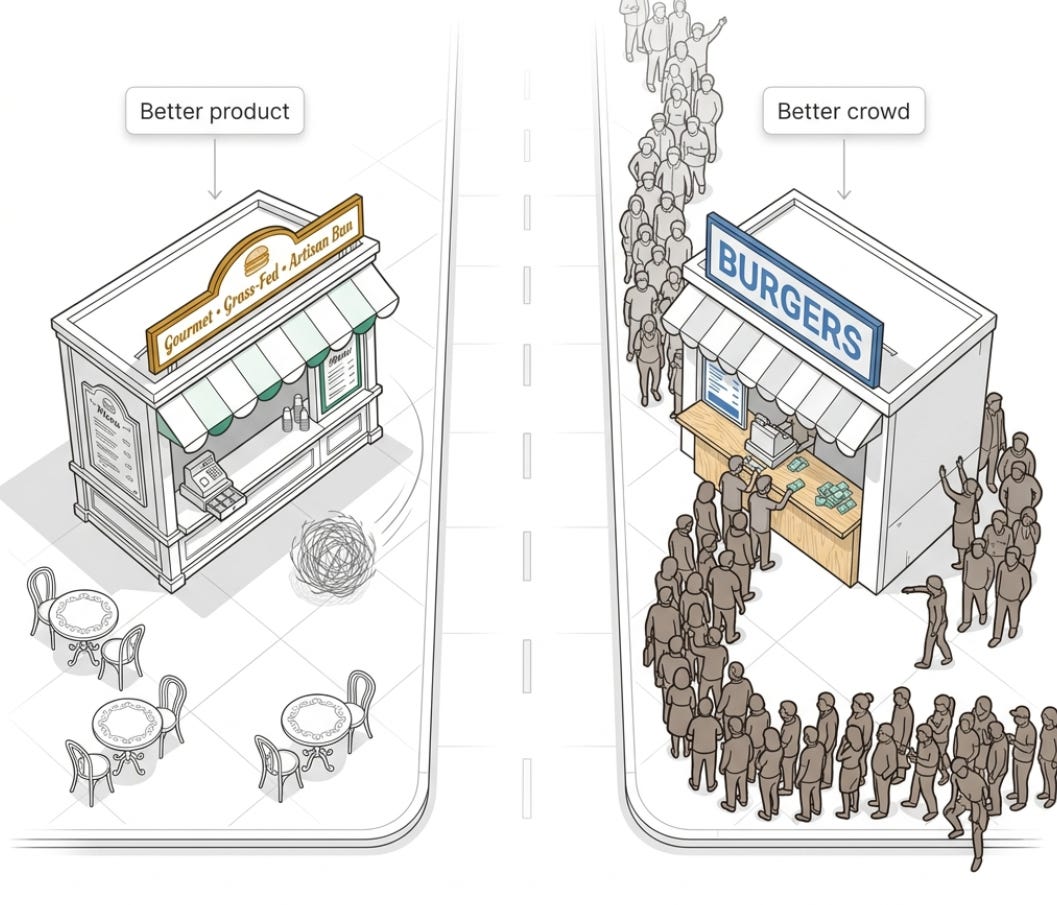
It’s a simple idea that’s easy to forget: demand does most of the heavy lifting. You can have sharp creative and a clean landing page, but if the people seeing it don’t really want the product, it’s a slog.
Pick a market that’s growing
Pick a product that has (or could have) demand
THEN make a better product
THEN market it well
Don’t try to do it backward.
Don’t market something people don’t want (and don’t ask me to do it either).
3. “The aim of marketing is to know the customer so well the product sells itself.” (Peter Drucker)
Drucker wrote this in Management back in 1973, and it pairs nicely with Halbert.
Halbert says find a hungry crowd. Drucker says get to know that crowd so well you barely have to sell to them.
He’s basically saying the goal isn’t cleverer ads. It’s understanding the customer well enough that the product mostly speaks for itself.
In an ad account, the best-performing creative usually isn’t the most creative. It’s the ad that describes the customer’s problem back to them so accurately they feel understood.
How do you find it? It comes from reviews, DMs, support tickets, and the actual words people use when they explain why they bought. CALL YOUR CUSTOMERS.
4. “If it doesn’t sell, it isn’t creative.” (David Ogilvy)
Ogilvy didn’t really come up with this line. He credits the Benton & Bowles agency.
Either way, the idea holds up. An ad’s main job is to sell. If it’s gorgeous but doesn’t sell, it didn’t do the thing it was there to do. If it’s a little ugly and sells, it worked.
The easy trap is falling for a concept because it’s clever. Clever ads make a founder + a team feel ‘cool’ but unless you are selling feeling cool somehow it probably won’t move the needle.
Just don’t make the opposite mistake of saying “if it’s not tracked by a clear click it didn’t sell” that is also not true. Fix your attribution, then fix your creative.
5. “Your brand is what other people say about you when you’re not in the room.” (Jeff Bezos)
Remember that half of your budget you can’t quite measure? A good chunk of it lives here. There is a reason I put this right after #4, these quotes need to live side by side in your brain.
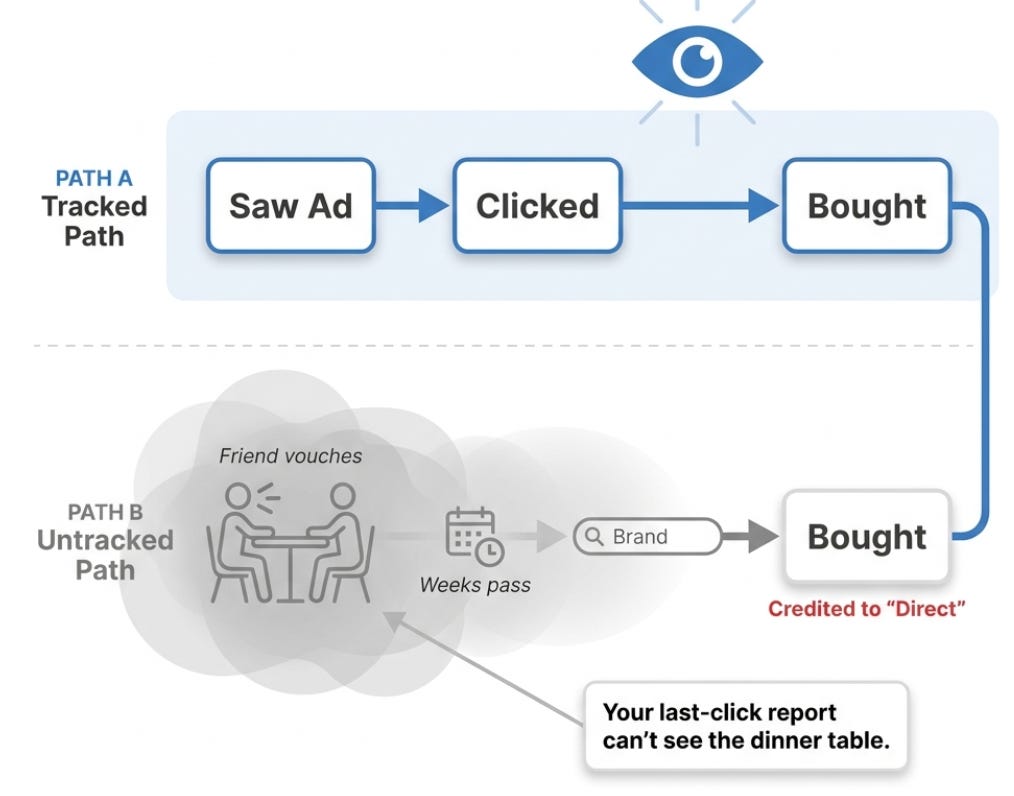
Your brand is the stuff people say about you when there’s no pixel around. The word of mouth, the recommendation in a group chat, the “oh yeah, I’ve heard of them” that quietly makes your next ad convert a little better.
Attribution is never going to fully catch that. Your last-click report can’t see the friend who vouched for you over dinner.
For anyone running paid, I focus on ads that do three things at once.
Drive New Purchases (We know they are compelling)
Drive New Reach (Not just retargeting)
Speak to selling points (Not just promos)
Think about it. Of the people who watch 15s of a Meta ad (thruplay) 99%-99.5% won’t purchase (at least directly). If NC ROAS is similar, pick the ad that uses that 15s to speak selling points to new people NOT promos to the same people over and over.
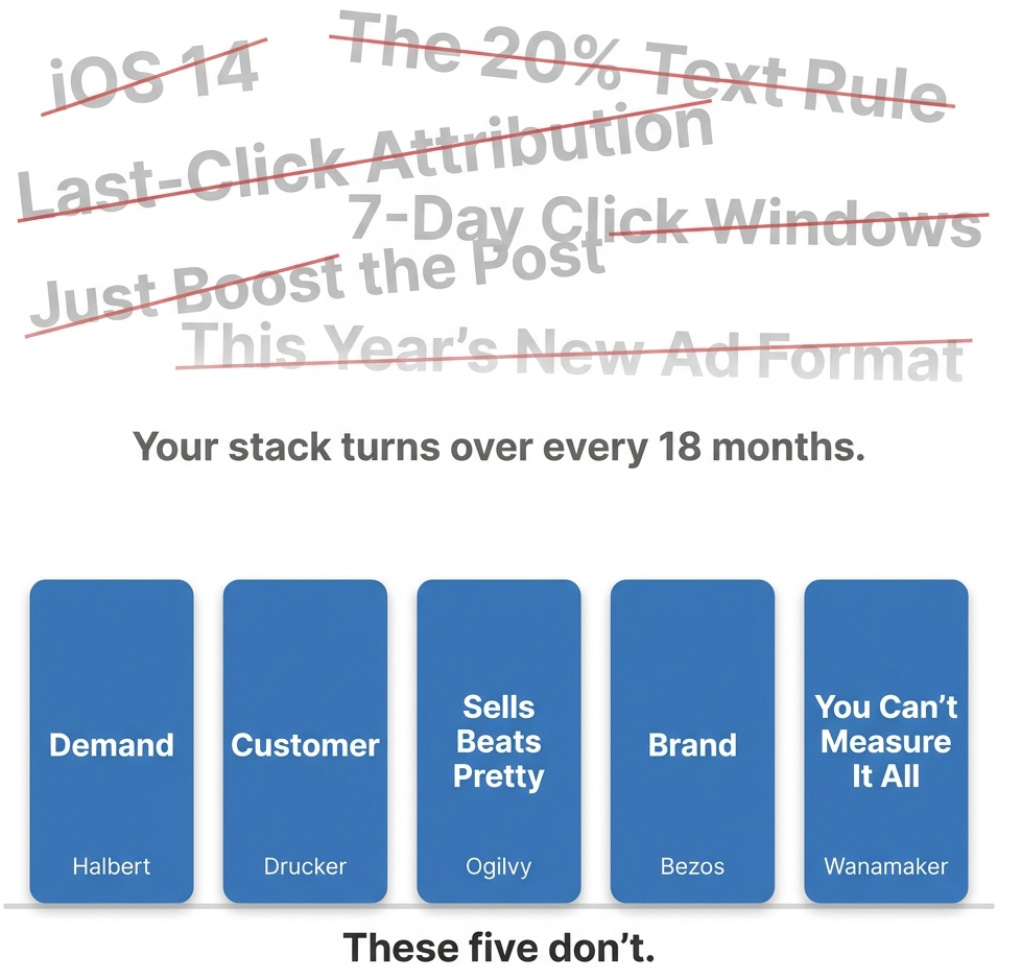
Why these five stuck around
These are the things that don’t change.
Find demand.
Know the customer.
Figure out how to sell.
Build a good brand.
Realize that you can’t measure perfectly.
If this was useful, send it to your team or share on Social!
Best,
Curtis
Sources
Bullmore / archives (“no such reference”): Marketing Society, “Why it’s time to say goodbye to IKTHTMISOAIW” at marketingsociety.com/the-library/why-it’s-time-say-goodbye-ikthtmisoaiw
Wanamaker attribution history: Quote Investigator at quoteinvestigator.com/2022/04/11/advertising/
Ogilvy citing the line in Confessions + Bullmore context: Conversable Economist at conversableeconomist.com/2018/07/25/half-the-money-i-spend-on-advertising-is-wasted-and-the-trouble-is-i-dont-know-which-half/
Ogilvy / Benton & Bowles origin: Doug Garnett’s Blog at dsgarnett.wordpress.com/2014/04/07/the-best-ideas-come-as-jokes-but-the-best-quotes-are-sourced/
Halbert, “starving crowd” (The Boron Letters, Ch. 6): bagerbach.com/books/boron-letters/
Drucker verified sources (Management / The Essential Drucker): Hammock at hammock.com/marketing/favorite-peter-drucker-quotes-about-customers-and-marketing/